
Nail trims are one of those grooming services that tend to get pushed to the back burner. They don’t seem urgent. The dog isn’t limping. The cat isn’t complaining. Everything looks fine. But overgrown nails are one of the most common and easily preventable sources of discomfort in both dogs and cats, and by the time most owners notice a problem, it’s been building for a while.
Here’s why regular nail trims deserve a spot on your pet care routine, and what happens when they don’t.
What Overgrown Nails Actually Do
For dogs, nail length directly affects how they stand and move. When a dog’s nails are too long, they make contact with the ground before the paw is properly positioned. That pushes the toes upward and shifts the weight distribution across the foot and leg. Over time, that subtle misalignment puts unnecessary stress on the joints — ankles, knees, hips. For senior dogs or breeds already prone to arthritis and joint issues, consistently overgrown nails can genuinely accelerate discomfort that might otherwise have been years away.
Long nails also catch on things. Carpet, fabric, blankets, outdoor terrain. A nail that snags and tears is painful and can bleed significantly. Nails that aren’t trimmed regularly also become harder to cut — the quick, which is the blood vessel inside the nail, grows longer as the nail grows, making it trickier to trim back without getting too close.
For cats, the stakes are a little different but equally real. Cat nails grow in a curve, and without regular trimming they can arc back toward the paw pad and actually grow into the skin. That’s as uncomfortable as it sounds and can lead to infection if it goes unnoticed. Even before it gets to that point, long cat nails catch on upholstery, snag on fabric, and make everyday movement less comfortable than it should be.
The Quick Problem
One reason nail trims get avoided at home is the fear of cutting the quick. It’s a valid concern — hitting the quick causes bleeding and is uncomfortable for the dog or cat in the moment. But here’s the thing: the longer nails go without being trimmed, the further the quick grows into the nail. Regular trims keep the quick receded, which makes every future trim safer and easier.
A groomer who knows what they’re doing minimizes quick cuts significantly. And for pets with dark nails where the quick isn’t visible, experience matters even more. Lindsey has trimmed enough nails across enough breeds to know how to approach dark nails carefully and read the subtle cues the nail gives before you get too close.
Dogs and Nail Trims
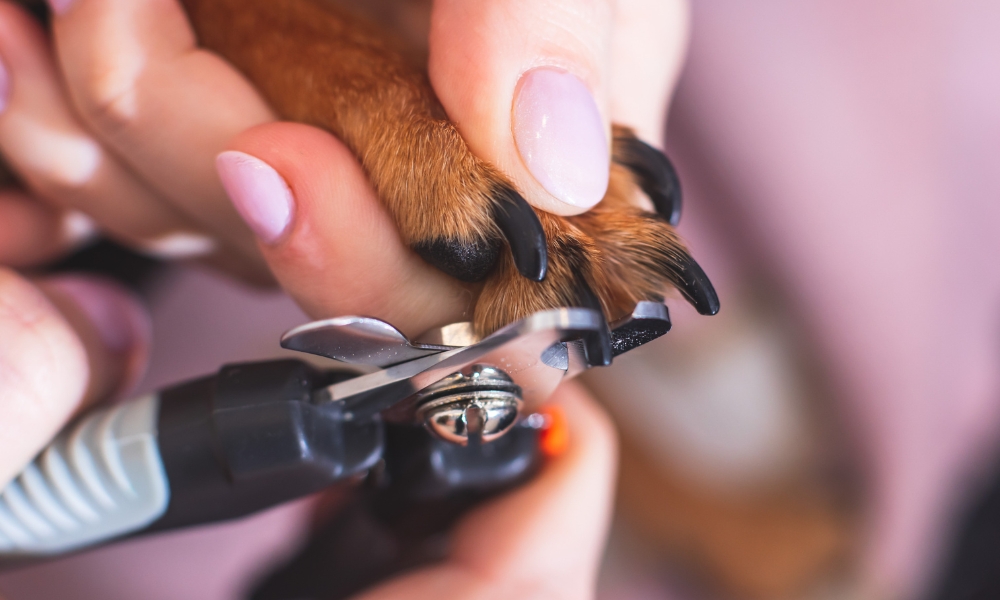
Most dogs need their nails trimmed every 3 to 4 weeks. A good indicator at home is sound — if you can hear your dog’s nails clicking on hard floors, they’re overdue. Another check is visual: if the nail extends past the bottom of the paw pad when your dog is standing, it’s time.
Some dogs are completely unbothered by nail trims. Others treat it like a genuine crisis. Both are normal, and both are manageable with the right approach. For dogs who are anxious or resistant, rushing through the trim makes it worse every time. Lindsey’s background in animal behavior means she knows how to read a dog’s stress level and adjust accordingly — going slower, taking breaks, making the experience as calm and low-key as possible so it doesn’t become something the dog dreads.
For dogs who are really resistant at home, having it done professionally on a consistent schedule is genuinely the easier path. It takes about 10 minutes, it keeps the nails at a healthy length, and it removes the wrestling match from your living room entirely.
Cats and Nail Trims
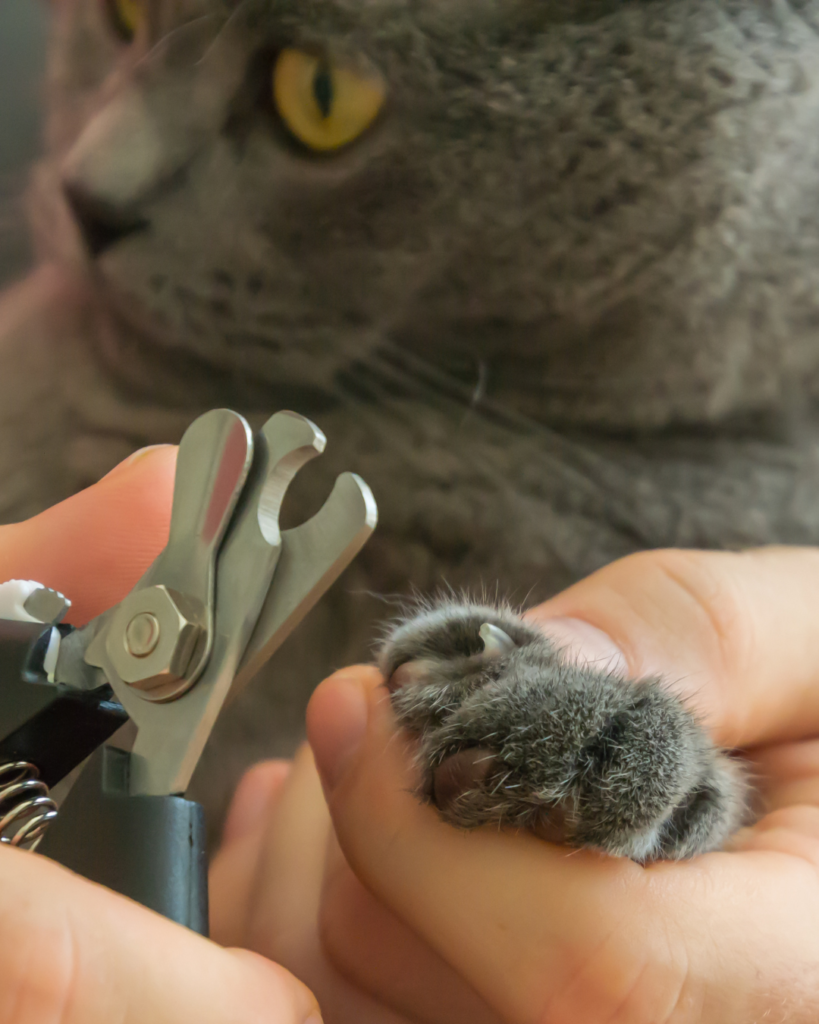
Cats are a different story, and not just because they’re cats. Most cats are not nail trim enthusiasts. They’d rather be doing literally anything else, and they’re not shy about making that known.
The good news is that a cat nail trim done well is quick and low-stress when the cat is handled correctly. The key is not forcing it, not rushing it, and knowing how to position and hold a cat in a way that feels secure rather than threatening. Lindsey works with cats regularly and understands that the approach that works on a dog won’t work on a cat. Patience, calm handling, and reading the cat’s cues are what get the job done without turning it into a trauma response.
For indoor cats especially, nail trims every 4 to 6 weeks are a good target. Indoor cats don’t wear their nails down the way outdoor cats do, so without regular trimming the nails grow longer faster than most owners expect. A nail trim can also be added onto any cat grooming appointment, making it an easy thing to stay on top of without a separate visit.
Filing: The Step Worth Adding
After a trim, a quick filing smooths the sharp edge left by the clipper. For dogs who snag their nails on things frequently or for cats whose sharp tips are doing a number on your furniture, the filing step makes a noticeable difference between visits. It’s a small addition to the appointment that extends the results of the trim and keeps nails from catching on things as quickly.
Making It a Habit
The single best thing you can do for your pet’s nail health is stay consistent. Regular trims keep the quick short, keep the nails manageable, and make each appointment easier than the last. Pets who get their nails done regularly are almost always better about it than pets who only come in when the nails are visibly too long.
At Eden Rose Pet Grooming, nail trims are available as a quick standalone service or as part of any full grooming appointment — for both dogs and cats. If you’re not sure how your pet’s nails look or whether they’re due, bring them in and Lindsey will take a look.
To book a nail trim or full grooming appointment, call or text 405-370-4027, visit edenrosepetgrooming.com, or stop by at 7101 NW 150th St., Oklahoma City, 73142. You can also reach us at info@edenrosepetgrooming.com.