
Most dog owners know their dog needs a bath every now and then. But professional dog grooming is a lot more than getting a dog wet and drying them off. A proper groom addresses coat health, skin condition, nail length, ear hygiene, and overall comfort in ways that a quick rinse at home simply can’t match. And when it’s done consistently, the difference in how your dog looks and feels is hard to miss.
Here’s a straightforward look at what dog grooming actually involves and why staying on a regular schedule is worth it.
More Than a Bath

A professional groom starts before the dog ever gets in the tub. A thorough brush-out removes loose hair, works through tangles, and preps the coat so the bath actually does its job. Bathing a matted or heavily shed coat without brushing it first just locks the problem in deeper.
The bath itself uses products suited to your dog’s specific coat type and skin condition. What works on a Poodle isn’t what you’d reach for on a Husky, and a dog with dry or sensitive skin needs something different than a dog with a healthy, oil-balanced coat. After the bath comes the blow-dry — for most breeds this isn’t optional. A coat that isn’t fully dried before any cutting or clipping begins looks different and sits differently than one that’s been properly finished.
Then comes the actual groom. Depending on the breed and the services selected, that might mean a full haircut, a breed-specific trim, a tidy-up around the face and paws, or a clean finish on a short-coated dog. Every step matters, and every step takes time when it’s done right.
Breed-Specific Grooming: Why It Matters
Not every dog should be groomed the same way, and a groomer who treats them like they should is going to produce results that reflect that. Breed matters — not just for aesthetics, but for the long-term health and manageability of the coat.
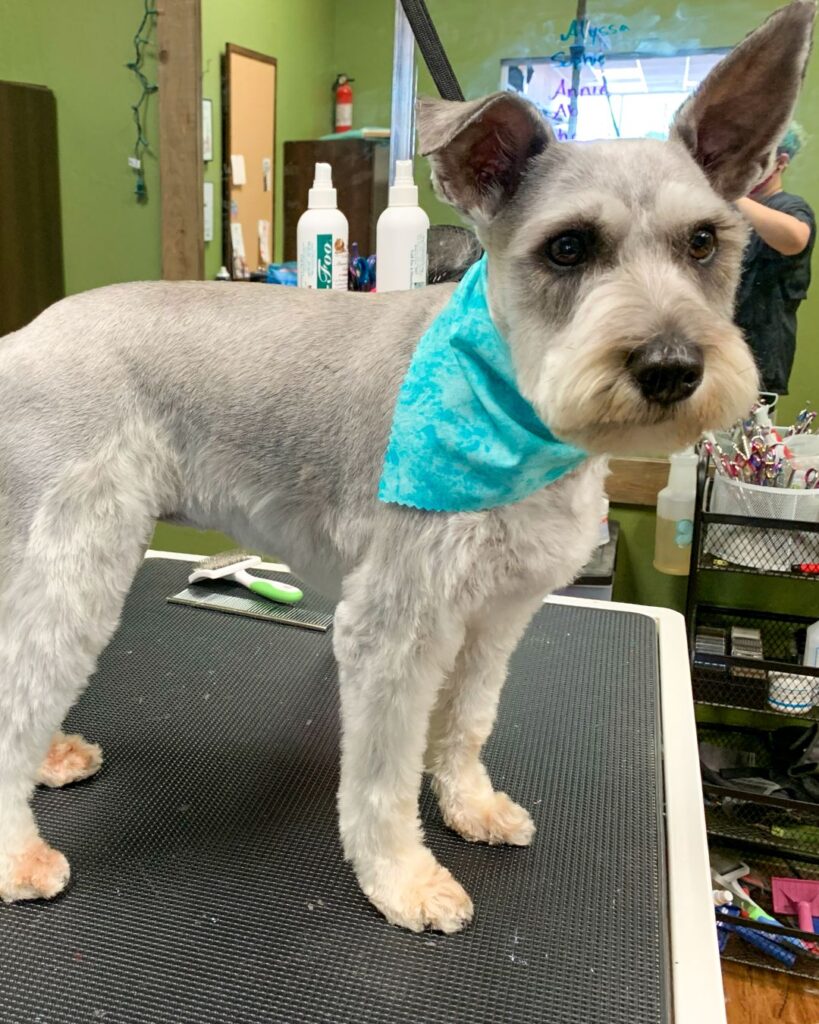
A Goldendoodle needs a completely different approach than a Labrador. A Shih Tzu’s silky coat has different needs than a Schnauzer’s wiry double coat. Cocker Spaniels have specific patterns that, when done correctly, make the coat easier to maintain between visits. Poodles require detailed scissor work and a groomer who understands how curl pattern affects the finished cut. Yorkshire Terriers have fine, fast-growing coats that need consistent attention to stay clean and tangle-free. Get any of these wrong and it shows — not just in how the dog looks when they leave, but in how the coat grows back and how the dog feels about coming back.
Lindsey has spent 15 years building expertise across a wide range of breeds and coat types. She knows breed standards, understands coat behavior, and adjusts her approach for every dog that comes through the door. That knowledge shows up in the finished groom every single time.
Coat Health and Skin Condition
One of the things a professional groomer notices that most owners miss is what’s happening underneath the coat. Hot spots, skin irritation, early-stage matting, or unusual changes can all hide beneath a full coat and go unnoticed between appointments. Lindsey pays attention to what she’s seeing at every groom and flags anything worth a follow-up with your vet.
Regular grooming also keeps the coat itself healthier. Removing dead hair and buildup allows the skin to breathe, reduces shedding around the house, and helps distribute the natural oils that keep the coat looking and feeling good. A dog on a consistent grooming schedule almost always has a noticeably better coat than one who only goes in occasionally.
Shedding, Deshedding, and Double Coats
If you have a heavy shedder — Labs, Golden Retrievers, Huskies, German Shepherds — a professional deshedding treatment is one of the most useful things you can add to a regular groom. Deshedding goes deeper than a standard brush-out, working through the undercoat to pull out the loose hair that’s building up before it ends up all over your floors and furniture.
For double-coated breeds this is especially important. Double coats are designed to insulate and protect, and they do that job well when they’re maintained properly. When they’re not, the undercoat becomes packed and dense, trapping heat and moisture and making the coat harder to manage over time. And worth saying plainly — double coats should not be shaved. Shaving disrupts the coat’s natural function and can permanently change the texture and growth pattern. Regular deshedding is the right approach, full stop.
Dog Nail Trimming: Why It Matters
Nail trims feel like a small thing. They’re not. Dog nails that grow too long affect the way your dog stands and walks. When nails hit the ground with every step, they push the toes upward and put pressure on the joints — something that adds up over time, especially in older dogs or breeds already prone to joint issues. Long nails catch on carpet and fabric, crack and split more easily, and in severe cases can curve around and grow into the paw pad.
Most dogs need their nails trimmed every 3 to 4 weeks. Some owners handle this at home without any trouble. A lot of dogs, though, are not cooperative for nail trims at home — they pull, they panic, they make it a whole event. That’s where a professional makes life easier for everyone, the dog included.
Nail trims at Eden Rose can be done as a standalone service or added onto any grooming appointment. For dogs who are especially resistant, a nail filing after the trim smooths the edges and reduces the chances of a sharp nail catching on anything between visits.
How Often Should Your Dog Be Groomed?
It depends on the breed, the coat type, and the services involved — but here are some general guidelines.
Dogs with fast-growing or curly coats like Poodles, Doodles, and Schnauzers typically need a professional groom every 4 to 6 weeks. Long-haired breeds like Cocker Spaniels, Shih Tzus, and Yorkies do well on a 6 to 8 week schedule. Short-coated breeds can often go 8 to 12 weeks between full grooms, though regular baths and deshedding treatments in between are still worthwhile.
When in doubt, just ask. When you bring your dog in, Lindsey will give you an honest recommendation based on what she’s seeing — not a upsell, just a practical answer based on your specific dog and their coat.
What to Expect at Eden Rose
Fifteen years of experience means Lindsey has worked with just about every coat type, breed, and temperament you can think of. She knows how to read a dog, adjust her approach for anxious or reactive pets, and deliver a great result without making the experience harder on the dog than it needs to be. Her background in animal behavior shapes how she handles every appointment — from the dog who hops up on the table like a pro to the one who needs a little extra patience and a slower pace.
Every dog that comes through Eden Rose gets that same level of care and attention, whether it’s a quick nail trim or a full breed-specific groom from start to finish.
Ready to book? Call or text 405-370-4027, visit edenrosepetgrooming.com, or stop by at 7101 NW 150th St., Oklahoma City, 73142. You can also reach us at info@edenrosepetgrooming.com.