
If you’ve ever taken a Golden Retriever to a groomer who mostly works on short-coated dogs, or dropped off a Poodle somewhere that treats every cut the same, you already know something felt a little off when you picked them up. It’s not always something you can put your finger on — but the difference between a groomer who understands your dog’s breed and one who doesn’t tends to show.
At Eden Rose Pet Grooming, breed knowledge isn’t an add-on. It’s foundational to how Lindsey approaches every single appointment.
Coat Type Changes Everything
There are a few broad categories of coat that most dogs fall into — and the care required for each one is genuinely different, not just in technique but in tools, timing, and product selection.
Double-coated breeds like Huskies, Samoyeds, and German Shepherds have a dense undercoat beneath a protective outer layer. These coats require thorough deshedding and careful drying — not shaving. Shaving a double coat is one of the most common grooming mistakes out there, and it can actually disrupt the dog’s natural insulation and coat texture long-term. The outer guard hairs protect against both heat and cold, and once you cut them, regrowth doesn’t always come back the same way.
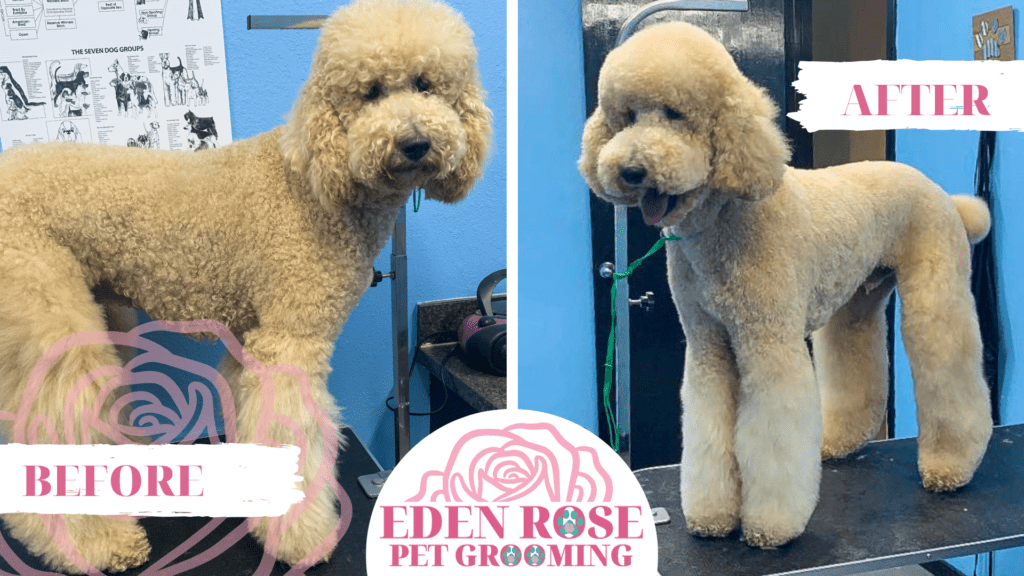
Curly and wavy coats — your Poodles, Doodles, Bichons — matt quickly if they go too long between grooming appointments. These coats need consistent brushing at home between visits, and the groom itself requires careful line work to keep the coat looking clean and healthy rather than shapeless. There’s real skill involved in working with curl pattern, especially on a dog whose hair has been neglected for a few months.
Wire coats, found on breeds like Schnauzers and many terriers, are traditionally hand-stripped rather than clipped — though most pet owners opt for a clipper trim. Knowing the difference, and knowing when to explain it to an owner, is part of what makes an experienced groomer worth finding.
Smooth, short-coated dogs like Boxers and Beagles look easy on the surface, but they’re heavy shedders and need proper bathing, blow-out, and brushing to manage the undercoat. A bath-and-brush on a short-coated dog done well makes a real difference in how much fur ends up on your furniture.
Breed Standards Matter — Even for Pets
Breed standards exist for a reason. They were developed by breed clubs and kennel organizations to reflect what each dog’s coat was designed to do and how it should be maintained. Even if your dog is never stepping foot in a show ring, those standards provide a useful framework for how the breed should be groomed.
A Cocker Spaniel’s silky, flowing coat, for example, has a specific pattern to it — the body coat is typically trimmed shorter while the ears and legs keep their length. Getting that wrong doesn’t just look off aesthetically; it can affect how the coat grows back and how easy it is to manage going forward.
Lindsey’s background in breed standards means she knows what a proper Schnauzer trim looks like versus a lazy all-over clip. She understands the structure of a Poodle’s topknot and why the proportions matter. That knowledge shows up in every finished groom — whether your dog is a show-quality purebred or a scruffy rescue mix.
Temperament Is the Variable Nobody Talks About Enough
Coat and breed are only part of the picture. The other piece — the one that makes or breaks a grooming appointment — is the dog’s temperament and how a groomer responds to it.
Some dogs are seasoned pros who hop up on the table and practically groom themselves. Others are anxious, reactive, or simply young and overwhelmed by the whole experience. Herding breeds can be more sensitive to handling around their hindquarters. Toy breeds sometimes have big personalities and even bigger opinions about nail trims. Rescue dogs may have unknowns in their history that make certain handling approaches stressful.
Lindsey’s training in animal behavior isn’t a background detail — it’s something that directly influences how she handles each dog. Reading stress signals, knowing when to slow down, understanding what kind of restraint is appropriate for a specific dog at a specific moment — these are skills that take years to develop. They’re also what separate a groomer who can get the job done from one who gets it done well, without the dog leaving the appointment worse off emotionally than when they arrived.
Why It Matters for Your Dog Specifically
Most pet owners aren’t looking for a show groom. They want their dog clean, comfortable, and not traumatized. Breed-specific knowledge serves that goal directly.
When your groomer understands your dog’s coat, they’re less likely to cause damage, less likely to miss a growing matt under a fluffy exterior, and more likely to give you honest guidance about maintenance between appointments. When they understand temperament, your dog’s experience at the salon is genuinely better — and a dog that has a good experience is a dog that’s easier to groom next time.
At Eden Rose, every groom starts with understanding who the dog actually is — not just what breed they are, but how they feel about being there, what their coat needs right now, and what will set them up for a healthier coat long-term.
To add red light therapy to your next appointment, give us a call at 405-370-4027, visit edenrosepetgrooming.com, or email us at info@edenrosepetgrooming.com. You’ll find us at 7101 NW 150th St., Oklahoma City, 73142.